Welcome back to my tiny slice of the internet! I’m reviving my neglected blog to write about my garden and how I’ve started growing food this year. My last post was in February, when I celebrated the start of Spring. I wasn’t sure if I would return to this blog, but I feel the need to share my garden updates with someone!
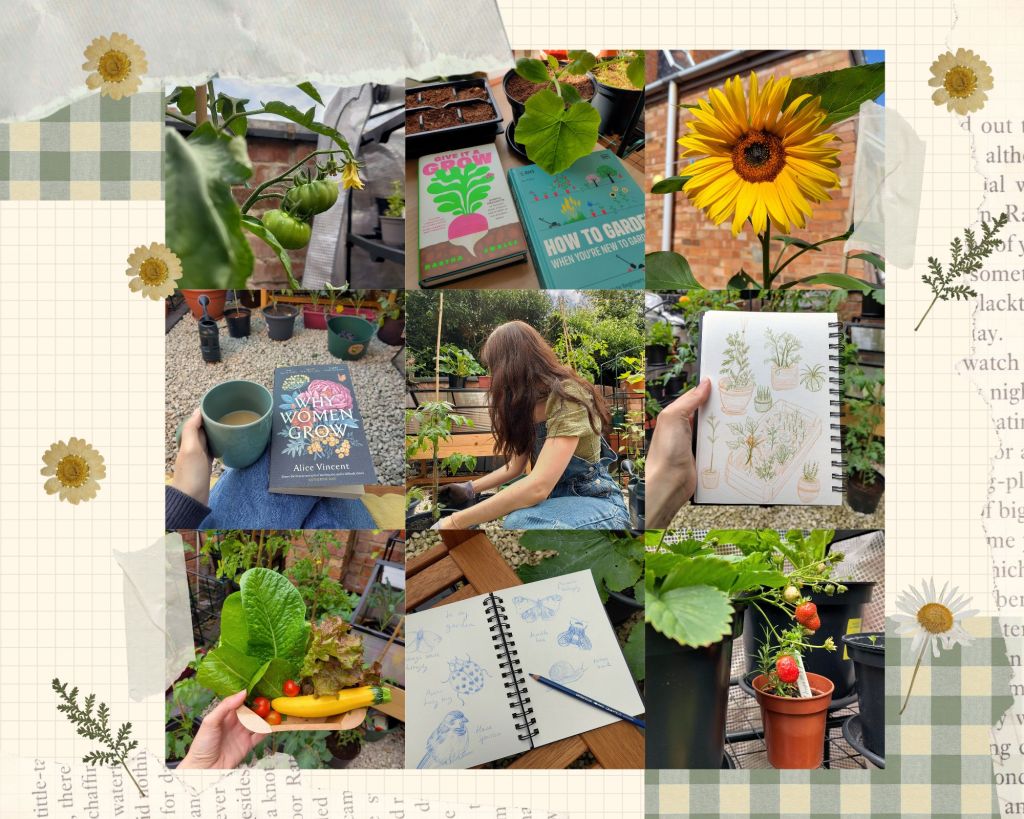
I’ve always loved nature, trees, moss, anything green, but I’ve never had a garden of my own.
I grew up in a house with a vast, messy, mostly abandoned garden. My parents didn’t have time to look after it properly, and trees and plants grew wild. Pink bougainvillaea covered one side of the house overlooking the garden. Weeds grew more than a meter tall, and my sisters and I would run around the garden, hiding behind the never-ending weeds. Pine trees covered the backyard, followed by unruly bamboo. My favourite part was this gigantic ficus tree that I would climb as high as I could, its branches broad and strong.
Amongst all the chaos, there used to be a plum tree that had the sweetest, softest prune plums. Despite being neglected, it grew plums for many years while I was a kid. I still try to find them as an adult in England, but even the ones I buy imported from Spain don’t taste the same.
During the Summer, I would take my bike and harvest blackberries growing around my neighbourhood. They were small and sweet. Sometimes I would eat them straight from the bush instead of waiting to get home and wash them.
It was memories like these that made me want to start my own garden. I wanted to grow vegetables and fruit, and I naively thought it wouldn’t be too hard.
I quickly learned that England isn’t like Spain. The weather is too unpredictable, too cold and sun-deprived. It wasn’t until May that my seedlings started to take shape and were strong enough to be repotted and go outside.
Growing vegetables for the first time
In early February, I started two seed trays with strawberries and golden courgettes, and in March, I started cherry tomato seeds. I also left my potatoes on a warm windowsill to chit.
I enjoy the cold weather and gloomy dark days, but this year I needed sun and warmth. I checked the weather app constantly, looking for signs that the days were getting longer and the temperatures were rising. The last day of frost was a happy day for me. I had moved my seedlings to medium pots and was eager to put them outside.

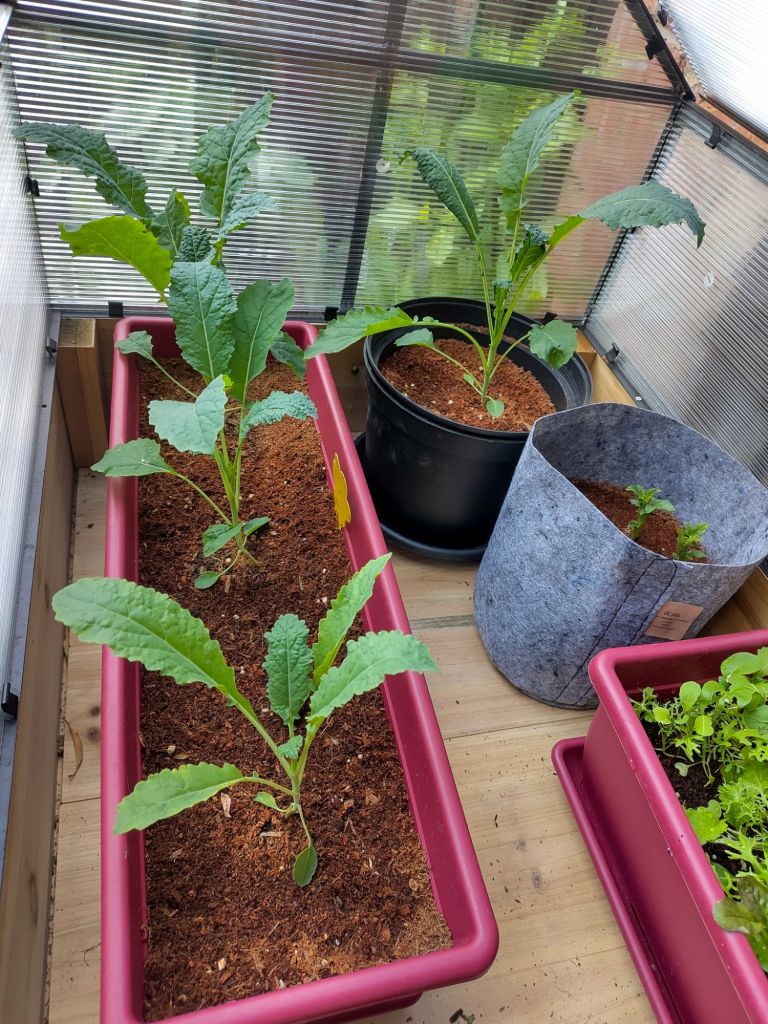
Because my small and mostly gravel garden is northeast facing, I spent too long tracking the hourly sunlight so I could figure out the best spot to grow my veggies. There wasn’t much space, but I did my best.
It was finally Spring, but it was still too cold. I bought two PVC greenhouses so I could start growing outside. I spent too much money buying peat-free compost to fill my only bed, where I could grow different lettuces and carrots. I also moved one of the courgette plants and added a basil plant to keep pests at bay. The joke was on me, though, because I would be tearing it down only two months later. The soil was covered in flies and eggs, my beloved and protected garden bed had created the perfect environment to grow gnat flies that had grown too big to be tempted by a mere sticky fly trap. The flies were leaving the garden bed, attaching to all the other pots, and coming into the house. The lettuces were covered in them, and I saw no way out other than removing the garden bed.

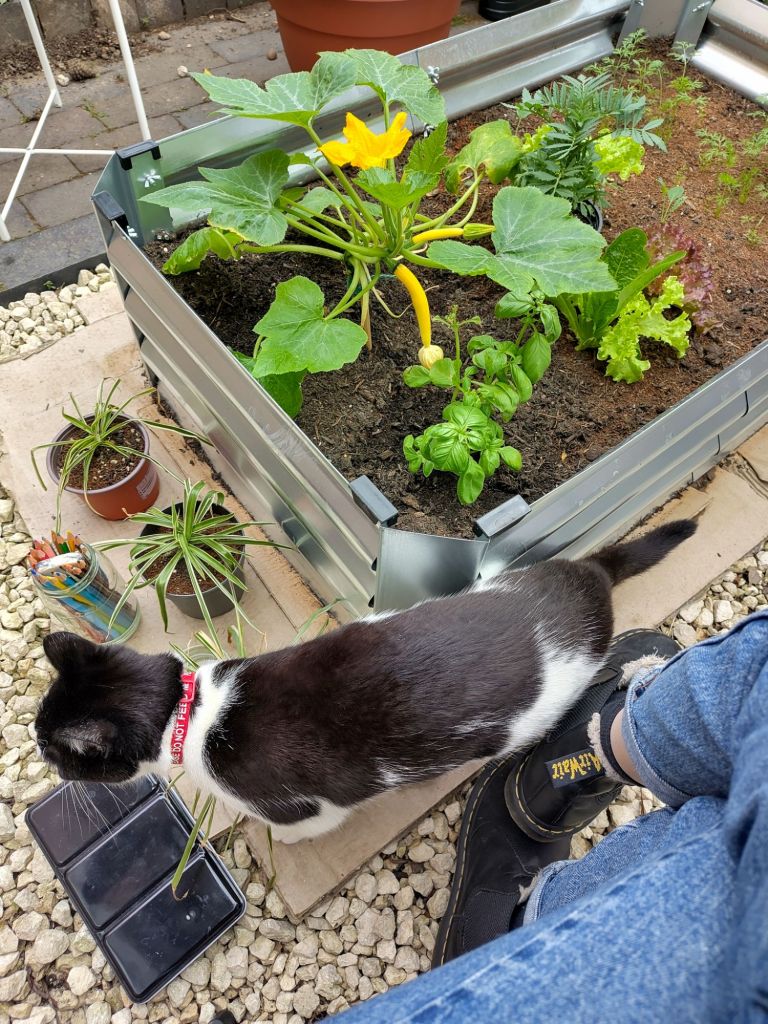

Devastated, but never deterred, I continued to tend to the garden. I planted more carrot seeds (the originals were too small and frail to even attempt to replant). I saved the courgette plant and moved it to an individual pot. One of my three cherry tomatoes died, but the other two were thriving, so I moved them to a big pot with a 2m-high trellis made with bamboo canes. Planted sage and added a marigold plant to hopefully deter pests this time.
I’ve planted new seeds every month for different vegetables, hoping to get different crops throughout the summer and autumn. Though, as I write this in late July, the harvests have been small. My garden doesn’t get enough sun, and growing the plants in pots makes it harder to keep the soil happy.
The Summer harvests

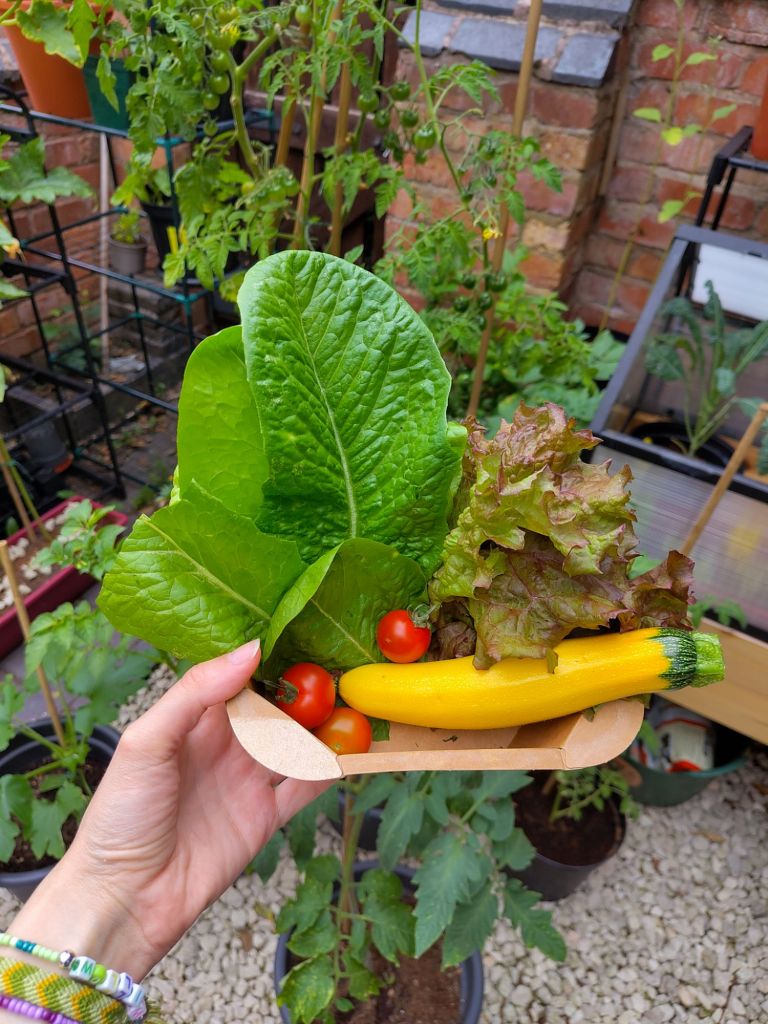

So far, I’ve had more luck growing a regular supply of leafy greens like lettuce heads, chives, kale and spinach than root vegetables like carrots and courgettes. Despite the constant threat of pests, my leafy greens thrive in my partially sunny garden. Surprisingly, cucumbers and strawberries are growing despite the unpredictable weather, and I harvest a row of cherry tomatoes each week, which has been amazing!
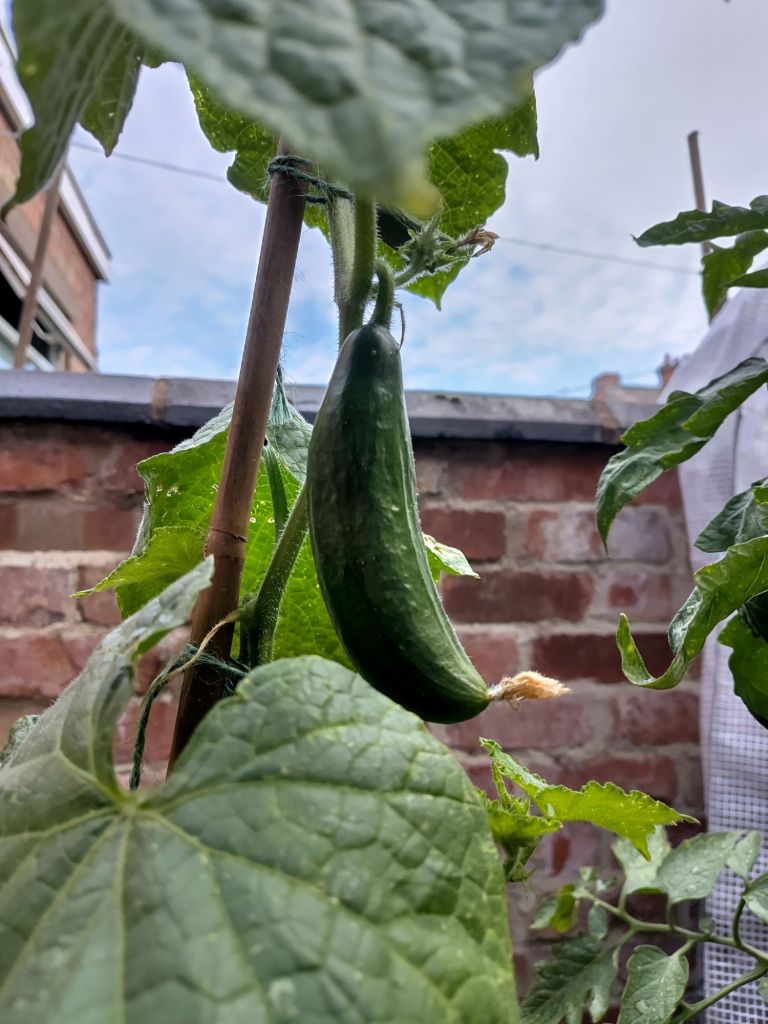


I find the potatoes frustrating, they still have strong green leaves and show no plan of stopping. I’m a punctual girl, and I know we’re way behind schedule. I don’t even know if any potatoes are growing at all.
Gardening for mental health
I love being outside in the early morning, the air is cold and misty, and everything is quiet, except for the birds. I like to sit outside on our bench and drink my tea while watching my cat roam around the garden. When the plants started to flower, my garden began to welcome bumblebees, which make the loudest happy noises inside the courgette flowers. We’ve got butterflies, snails, and more birds than last summer, when we’d just moved in and the garden was bare.


I’ve always found the world too loud and too fast, too crowded. But when I tend to my plants, it’s just me, my cat and the garden, and all the noise disappears.
I didn’t start gardening to improve my mental health, I just wanted to try to grow my own food. But after long days at the office, I go straight to the garden, and as I make sure everything is watered and doing well, and harvest the latest vegetables, the hum of my worklife and the city noise fade away.
Books and TV shows about growing vegetables


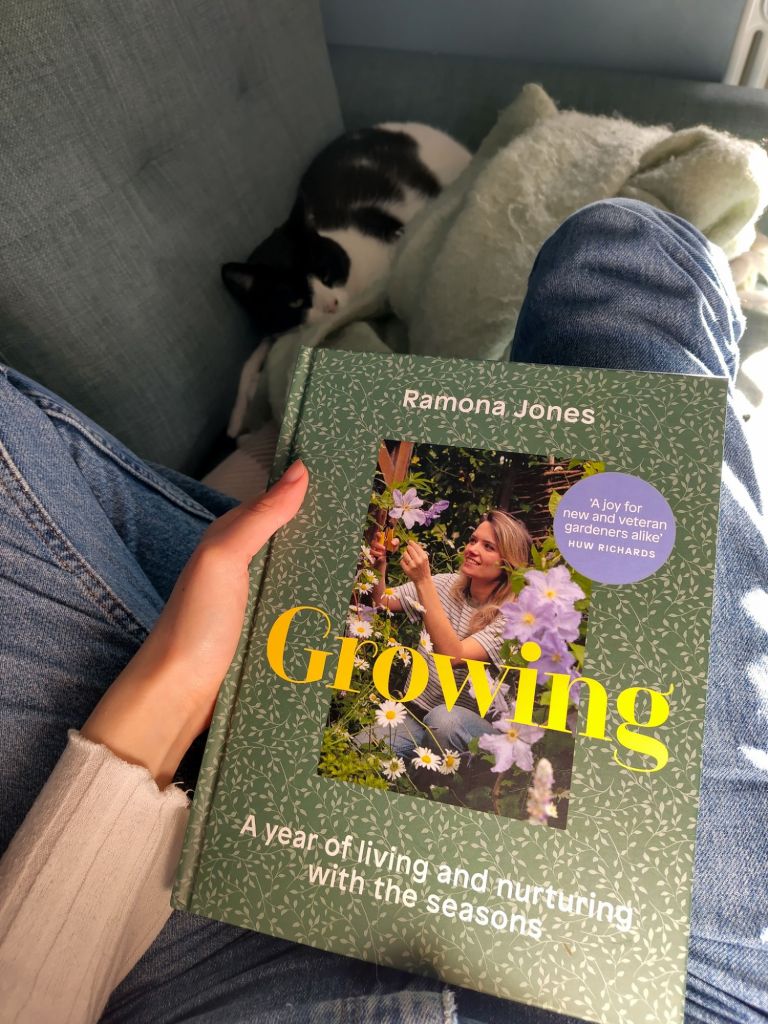
I love going to my local library with a purpose, whether I’m looking for watercolour guides or advice on adopting a kitten, I love walking around the small library and finding books on exactly the topic I’m interested in. And this time was no different. The collection of gardening books is outstanding, and I’ve borrowed different ones throughout the months, though I also own a few that I like to keep on hand when things go wrong in the garden.

Best gardening guides:
- RHS Step-by-Step Veg Patch: A Foolproof Guide to Every Stage of Growing Fruit and Veg by Lucy Chamberlain
- RHS How to Garden When You’re New to Gardening: The Basics for Absolute Beginners by D.K. Publishing
- Veg in One Bed: How to Grow an Abundance of Food in One Raised Bed, Month by Month by Huw Richards
- Give it a Grow: Simple Projects to Nurture Food, Flowers and Wildlife in any Outdoor Space by Martha Swales
Books about gardens and nature:
- Why Women Grow: Stories of Soil, Sisterhood and Survival by Alice Vincent
- Spring is the Only Season: How it Works, What it Does and Why it Matters by Simon Barnes
- Growing: A year of gardening wisdom with simple monthly projects by Ramona Jones
Gardening TV shows:
- Alan Titchmarsh’s Gardening Club (on ITVx): set in the UK, showing professionals and beginners growing foods and plants.
- Homegrown (HBO): set in the US, showing vegetable garden renovations for different climates and gardens.
I’m a vegetarian, so I eat a lot of vegetables, and so far the garden hasn’t provided enough veggies for me to stop the supermarket trips, I know that’s not realistic. Still, I can’t describe the joy of making a salad and just coming into the garden and cutting some leaves, grabbing a cucumber and cherry tomatoes and preparing a plate of food where 70% of the items were grown by me.
It’s exciting to experience each month and season through the lens of the garden. Keeping track of the weather and sunlight makes me feel grounded and present in a way that I have never experienced as someone who’s famously always in her head.
 Willow in Winter